Become Master in Digital Marketing!
Enroll Now

The travel industry has gone digital—and there’s no turning back.
Today, over 72% of travelers plan their entire trips online, and 65% of all travel bookings happen on digital platforms. Whether it’s a quick weekend getaway or a dream vacation across continents, most travelers now start their journey with a Google search, an Instagram scroll, or a YouTube video.
For major travel players like MakeMyTrip, Airbnb, Expedia, Booking.com, and TripAdvisor, digital marketing isn’t just helpful—it’s essential. These brands have built billion-dollar businesses by mastering SEO, social media, paid ads, personalized emails, and mobile-friendly websites. They understand that travelers today don’t just want options—they want experiences, trust, and convenience, all delivered at their fingertips.
In this article, we’ll explore how top travel brands use digital marketing to attract millions of travelers, build lasting trust, and stay ahead in one of the most competitive industries in the world.
Why Travel Brands Depend on Digital Marketing
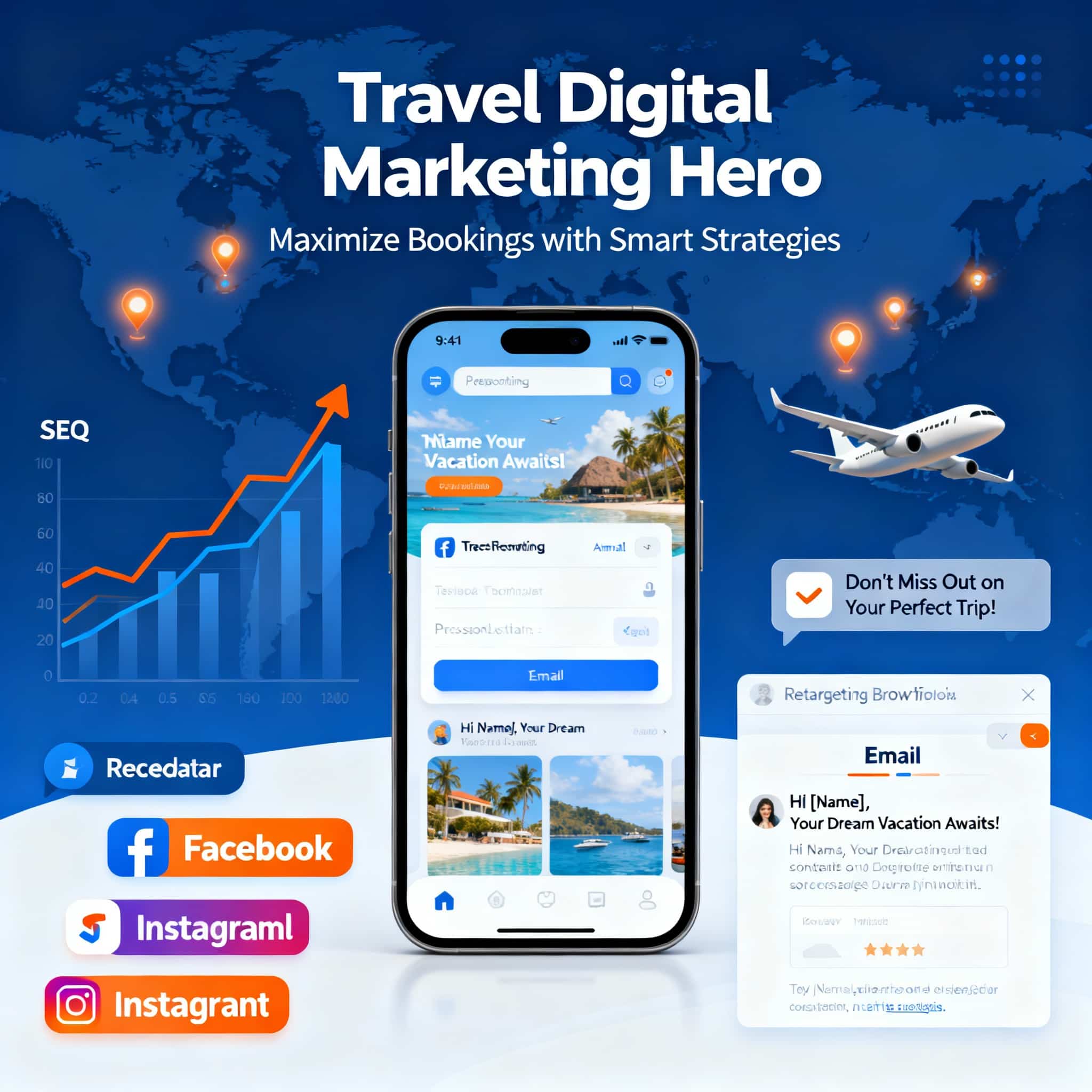
Let’s start with a simple truth: 90% of travelers research their trips online before booking anything.
Think about it. When you’re planning a vacation, what’s the first thing you do? You probably Google “best places to visit in Bali” or “cheap flights to Dubai.” You might scroll through Instagram for inspiration or check TripAdvisor for honest reviews. You’re not alone—millions of travelers do the exact same thing.
This shift has forced travel companies to meet customers where they are: online.
A few key stats that prove the point:
-
80% of travelers prefer to book their travel trips completely online.
-
75% of travelers say social media influences their destination choices
-
83% of travelers do some research on Google Search Engines or other on mobile phones before booking
Digital marketing allows travel brands to be visible at every step of this journey—from inspiration to booking to post-trip reviews. Whether through a well-ranked blog post, a retargeted ad, or a personalized email, these brands stay top of mind.
Without a strong digital presence, even the best travel services can become invisible.
SEO for Travel Brands: Ranking for the Right Keywords
Search engine optimization (SEO) is the backbone of digital marketing for travel companies.
When someone searches “budget hotels in Goa” or “best travel packages to Paris,” travel brands that rank on the first page of Google win the traffic—and often the booking.
How Major Players Use SEO
TripAdvisor is a perfect example. Over 100 million organic traffic visit this platform per month. How? By targeting millions of location-based keywords like “things to do in Las Vegas” or “best restaurants in Rome.” They’ve also built an enormous library of user-generated content—reviews, photos, and ratings—that keeps their pages fresh and relevant.
Booking.com and Expedia follow similar strategies. They invest heavily in:
-
Keyword research to identify high-intent searches like “cheap flights to Paris” or “last-minute hotel deals”
-
Localized landing pages for every city, region, and destination
-
User reviews and ratings, which search engines love because they signal trust and relevance
SEO isn’t just about ranking—it’s about attracting ready-to-book travelers. When someone searches for a specific destination or service, they’re already interested. SEO brings them straight to your doorstep.
For smaller travel agencies, local SEO is the key to competing. By optimizing for phrases like “best travel agency in Jaipur” or “eco-friendly stays in Himachal,” even small players can capture local traffic and beat the giants in their region.
Social Media Marketing & Influencer Collaborations
Social media has completely changed how travelers discover destinations.
75% of travelers say social media posts inspired them to visit a specific destination. Platforms like Instagram, YouTube, and TikTok have turned everyday travelers into influencers—and travel brands are paying attention.
How Top Brands Use Social Media
Airbnb is a master storyteller. They don’t just sell accommodations—they sell experiences. Through campaigns like “Live There” and “Get an Airbnb,” they encourage users to share their local experiences using hashtags and photos. The result? Authentic content that builds trust and inspires bookings.
Airbnb also partners with travel influencers and micro-influencers to showcase unique stays. These collaborations feel less like ads and more like personal recommendations from a friend.
MakeMyTrip taps into Bollywood and meme culture to connect with Indian audiences. They’ve partnered with celebrities like Alia Bhatt and Ranveer Singh for campaigns and use Instagram reels to showcase hidden gems across India. With over 170,000 Instagram followers, they engage travelers with destination tips, user stories, and interactive content.
Expedia and Booking.com use Facebook, Instagram, and YouTube to share travel inspiration, destination guides, and limited-time offers. They also leverage user-generated content by reposting traveler photos and videos.
Why does this work? Because travelers trust real experiences over polished ads. 92% of consumers trust user-generated content more than traditional advertising. When they see real people enjoying real destinations, they’re far more likely to book.
Paid Ads & Retargeting: Bringing Back Lost Visitors
Here’s a harsh reality: most travelers don’t book on their first visit. In fact, the average traveler visits 38 different web pages before finalizing a booking.
Paid Advertising and Re-targeting Ads Plays A Vital Role
How Retargeting Works in Travel
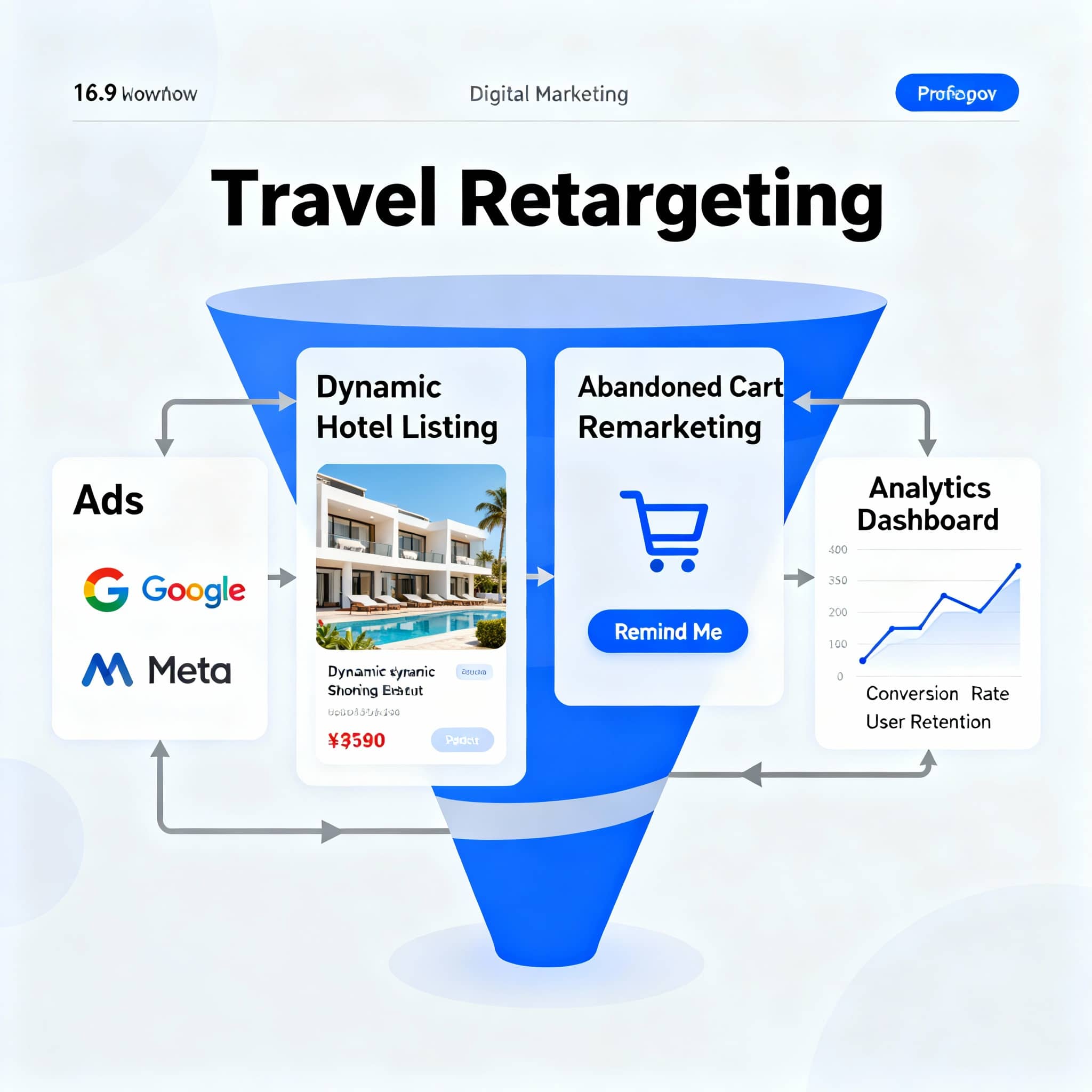
Let’s say you’re browsing Airbnb for a beachfront villa in Thailand. You check out a few listings, but you don’t book. The next day, you’re scrolling through Instagram—and boom, there’s an ad showing the exact villa you were looking at, maybe with a limited-time discount.
That’s retargeting. And it works incredibly well.
Travel brands use Google Ads, Meta Ads, and YouTube campaigns to re-engage visitors who didn’t complete their bookings. They segment audiences based on behavior—like users who abandoned carts, viewed specific destinations, or downloaded brochures—and serve them personalized ads.
Key retargeting strategies include:
-
Dynamic product retargeting: Showing users the exact hotel or flight they viewed
-
Time-based segmentation: Offering urgency (“Book today and save 20%”) to recent visitors and discounts to those who haven’t returned in weeks
-
Cross-platform targeting: Reaching users across Google, Facebook, Instagram, and YouTube
Expedia, for example, uses AI-driven advertising to personalize campaigns based on user behavior, search history, and booking patterns. The result? Higher engagement, better conversion rates, and increased ROI.
Even smaller travel agencies can use affordable retargeting strategies to bring back lost leads and convert them into bookings.
Website Design & User Experience: The Mobile-First Mandate
Here’s a stat that should wake up every travel brand: Over 60% of hotel bookings now happen on mobile devices.
If your website isn’t mobile-friendly, you’re losing customers—fast. 52% of mobile travelers will switch to another site or app if the one they’re using takes too long to load.
Why It’s So Important for Your Website to Be Mobile-Friendly and Optimized
Google now uses mobile-first indexing, which means it ranks websites based on how they perform on mobile devices, not desktops. If your site is slow, clunky, or hard to navigate on a phone, your search rankings—and bookings—will suffer.
Top travel brands prioritize:
-
Fast loading times (under 3 seconds)
-
Simplified navigation and touch-friendly buttons
-
Easy booking forms that work seamlessly on smartphones
-
A responsive design that looks great and works smoothly on every screen
Airbnb and Booking.com have invested heavily in mobile-optimized apps and websites. Their platforms are fast, intuitive, and designed to help users book in just a few taps.
This is also where InfinitusGiants’ web design services and training can make a real difference. A well-designed, mobile-first travel website doesn’t just look good—it converts visitors into customers. Clean visuals, fast performance, and user-friendly booking flows are non-negotiable in 2025.
Email Marketing & Personalization: Staying Connected After the Click
Email marketing might sound old-school, but for travel brands, it’s pure gold.
Why? Because it’s personal, direct, and incredibly effective when done right.
How Major Brands Use Email
Airbnb excels at personalized email campaigns. If you view a listing in Paris but don’t book, Airbnb will send you a follow-up email the next day featuring that exact property—along with similar options in the same price range. They also send location-based recommendations based on your past bookings and search behavior.
Booking.com uses email to send personalized itinerary suggestions, price drop alerts, and last-minute deals. Their AI-powered system analyzes user preferences and sends timely offers that feel relevant, not spammy.
Key email marketing tactics include:
-
Abandoned cart emails to remind users of listings they viewed
-
Personalized destination guides based on browsing history
-
Exclusive discounts for returning customers
-
Post-trip follow-ups asking for reviews and offering future deals
The beauty of email marketing is that it keeps your brand top of mind. Even if someone doesn’t book right away, regular (but not annoying) emails build trust and increase the chances they’ll return when they’re ready.
How Small Travel Agencies Can Compete with the Giants
Let’s be real—competing with MakeMyTrip, Expedia, or Booking.com isn’t easy. But it’s not impossible either.
Small travel agencies have one major advantage: they can offer personalized, authentic, and local experiences that big OTAs can’t match.
Practical Strategies for Small Players
Focus on local SEO. Optimize your website for keywords like “best travel agency in Udaipur” or “family-friendly tours in Kerala.” Claim your Google Business Profile, collect reviews, and create location-specific content.
Build a strong blog. Write destination guides, travel tips, and insider stories about hidden gems. This attracts organic traffic and positions you as a local expert.
Get benefit from social media and user-generated content. Encourage happy travelers to share their experiences and tag your business. Repost their photos and stories—it’s authentic and free marketing.
Invest in affordable paid ads. You don’t need a massive budget. Start with Google Ads or Facebook Ads targeting specific destinations, traveler types, or local keywords.
Partner with local influencers. Micro-influencers with engaged followers can drive bookings at a fraction of the cost of traditional ads.
Offer something unique. Whether it’s eco-friendly tours, customized itineraries, or local cultural experiences, focus on what makes you different.
The key is to be visible, authentic, and helpful. Travelers today value trust and transparency—and small agencies can deliver that better than any algorithm.
AI, Automation, and Personalization Makes The Future of Travel Marketing
Digital marketing is evolving fast, and travel brands that don’t adapt will be left behind.
What’s Coming in 2025 and Beyond?
AI-powered personalization is taking over. Tools like ChatGPT and AI travel assistants are helping travelers plan entire trips—from flights to hotels to activities—without ever leaving a chat interface.
Predictive analytics allows brands to forecast trends, adjust pricing in real time, and send hyper-targeted offers based on user behavior.
Voice search optimization is growing. Travelers are using voice commands like “Find me a beach resort near me” or “What’s the best time to visit Japan?” Travel brands need to optimize for natural language queries.
Sustainability messaging is becoming a must. Travelers, especially younger generations, care about eco-friendly practices. Highlighting green initiatives can set your brand apart.
User-generated content and influencer marketing will continue to dominate. Each time authencity leads.
The future of travel marketing isn’t just about being online—it’s about being smart, personal, and human. Technology is the tool, but trust and experience are what sell.
Conclusion: Digital Marketing Is the Engine Behind Travel Success
Digital marketing isn’t just helpful for major travel players—it’s the very foundation of their success.
From SEO that captures high-intent searches to social media that inspires wanderlust, from retargeting ads that recover lost bookings to personalized emails that keep travelers engaged, every digital strategy plays a critical role.
Brands like MakeMyTrip, Airbnb, Expedia, Booking.com, and TripAdvisor have proven that in 2025, the travel brands that win are the ones that meet travelers where they are—on their phones, in their inboxes, and across every digital touchpoint.
Whether you’re a global giant or a small local agency, the opportunity is the same: use digital marketing to connect, inspire, and convert.
Want to learn how to promote travel brands with SEO, social media, and paid ads?
Explore InfinitusGiants’ digital marketing and web design training programs today. Master the strategies used by the world’s top travel companies and start building your own success story.
Citations:
-
https://www.travelperk.com/blog/online-travel-booking-statistics/
-
https://www.condorferries.co.uk/online-travel-booking-statistics
-
https://www.trustyou.com/blog/trustyou-data/online-traveller-experience/
-
https://www.amraandelma.com/travel-platform-marketing-statistics/
-
https://reliqus.com/tripadvisor-seo-case-study-from-hidden-to-top-travel-destination/
-
https://traviyo.com/blog/understanding-the-importance-of-seo-for-online-travel-agencies
-
https://digitalagencynetwork.com/best-marketing-strategies-and-advertising-campaigns-of-airbnb/
-
https://skillfloor.com/blog/airbnb-marketing-strategy-case-study-pdf
-
https://shyamfuture.com/a-case-study-on-makemytrips-rise-to-riches-redefining-the-ota-landscape/
-
https://stickypinsinc.com/blog/makemytrip-digital-marketing/
-
https://digitalagencynetwork.com/digital-marketing-strategy-of-booking-com/
-
https://envisionitagency.com/blog/ugc-and-influencer-content-101-for-destination-marketers/
-
https://champdigital.com/blog/25-travel-tourism-marketing-statistics/
-
https://www.imarkinfotech.com/resources/7-retargeting-strategies-to-re-engage-post-click-visitors/
-
https://forgeapollo.com/blog/optimize-mobile-travel-website-design/
-
https://oneskai.com/importance-of-mobile-friendly-design-for-hotel-website/
-
https://travelerwp.com/mobile-optimization-for-travel-agency-websites/
-
https://okzest.com/blog/personalized-email-marketing-examples
-
https://www.linkedin.com/pulse/10-real-world-case-studies-prove-power-email-willem-drijver-iwzje
-
https://emailmarketersnewsletter.com/p/the-magic-behind-airbnb-s-email-strategy
-
https://mize.tech/blog/ai-in-tourism-marketing-hyper-personalization-and-more-bookings/
-
https://iatourisme.com/en/the-5-ai-trends-that-will-transform-tourism-in-2025/
-
https://www.trootech.com/blog/future-customer-experience-travel-ai-trends
-
https://www.g-co.agency/insights/travel-digital-marketing-trends-strategy-industry-insights
-
https://www.scribd.com/document/548801271/Marketing-Strategies-Adopted-by-Makemytrip-com-2
-
https://partner.expediagroup.com/en-us/solutions/advertise-with-us
-
https://www.indifi.com/blog/marketing-hacks-for-customer-attraction-on-makemytrip/
-
https://econsultancy.com/10-examples-of-great-airbnb-marketing-creative/
-
https://www.slideshare.net/slideshow/marketing-strategy-makemytrip/230154403
-
https://www.futuremarketinsights.com/reports/digital-travel-sector-outlook
-
https://www.deloitte.com/us/en/Industries/consumer/articles/travel-hospitality-industry-outlook.html
-
https://www.tripadvisor.com/business/insights/seo-tips-for-hotels
-
https://www.statista.com/topics/7589/digitalization-of-the-travel-industry/
-
https://famepilot.com/guide-to-manage-reviews-on-tripadvisor-booking-com/
-
https://pro.regiondo.com/blog/all-the-tourism-and-travel-statistics-you-need-to-know-in-2025/
-
https://blog.aspiration.marketing/en/what-is-retargeting-and-how-do-i-use-it-with-paid-advertising
-
https://www.saasquatch.com/blog/14-behavioral-email-marketing-examples/
-
https://traviyo.com/blog/performance-marketing-a-game-changer-for-the-travel-industry
-
https://www.webyking.com/blog/key-features-of-travel-website/
-
https://grassrootscreativeagency.com/email-marketing-examples/
-
https://rocketium.com/academy/digital-marketing-strategies-for-travel-agencies/
-
https://www.csimedia.net/importance-of-mobile-web-design-for-travel/
-
https://www.litmus.com/blog/airbnb-inspiration-email-to-build-brand-trust
-
https://www.appsflyer.com/blog/mobile-marketing/travel-app-marketing-trends/
-
https://traveltech-show.com/blog/hyper-personalisation-travel-next-frontier-targeted-marketing
-
https://www.verkeer.co/insights/how-travel-companies-can-compete-with-otas-and-metasearch/
-
https://digitalflavour.co/blog/digital-marketing-challenges-travel-tourism/
-
https://www.tatvic.com/blog/ai-in-marketing-2025-trends-tools-tactics/